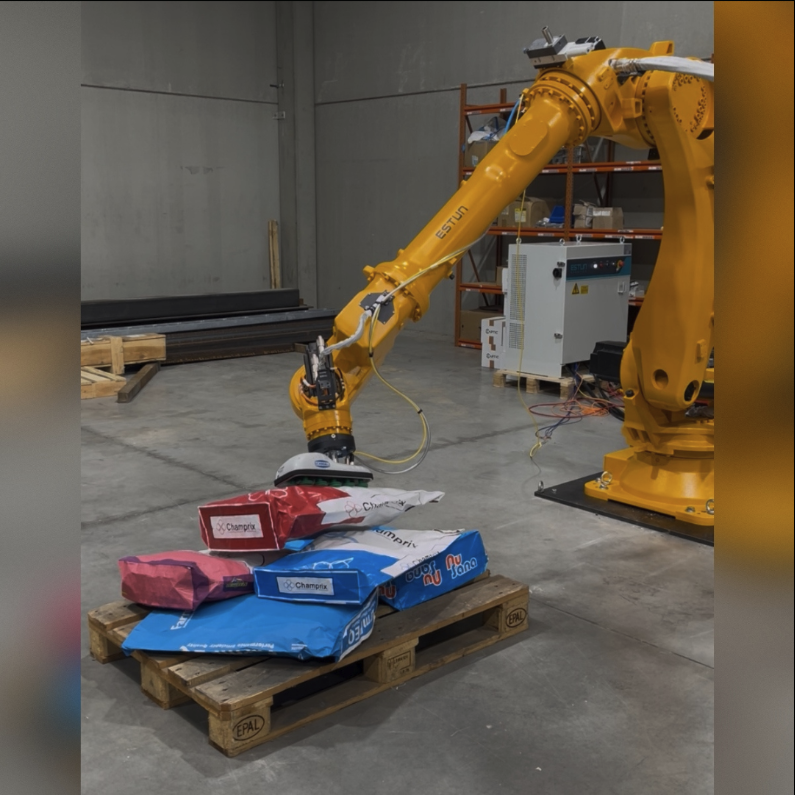









AI vision that turns a depalletizing robot into a reliable worker on your line, from the first shift.
Lifting 25 kg bags all shift wears people out, causes back injuries and is one of the hardest positions to keep staffed. Let the robot do it, every shift, and move your people to work that actually needs them.

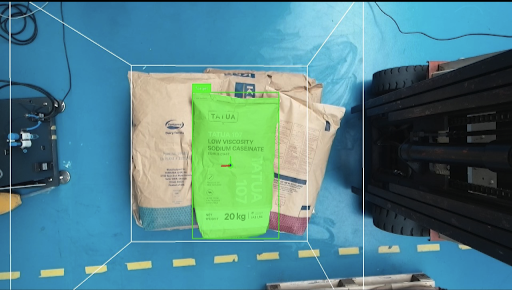
The same vision system already running on bag lines in food, feed and chemical plants. No toolkit to tune and no pilot that drags on: it picks reliably from the first day.

Every pick is logged in the cloud dashboard, so you see throughput, misses and trends per line. Our models learn from 3.5 million bags and counting, and new features arrive automatically, with no retraining on your side.

We look at your bag type, stacking and line conditions, and tell you honestly whether BagDepal can pick it. We get back to you as soon as possible, and if it’s a fit, we bring in one of our integration partners to propose a complete cell for your line.
Paper, PE, woven PP and multi-layer bags from 5 to 50 kg, on pallets that are neatly stacked, messy or mixed.
No. BagDepal needs no pre-configured stacking patterns, layer heights or layouts. It finds each bag as it is, so a changed pattern or a shifted load doesn’t need any reprogramming.
The vision detects damaged and deformed bags and adjusts how the robot grips them. If you prefer, damaged bags can be routed aside for manual inspection.
Captic supplies the vision system; our partner machine builders design, install and support the cell itself. BagDepal works with more than 35 robot brands, so the cell can be built around a robot you already know.
The vision finds the next bag in under 1 second. Total bags per hour depends on the robot and gripper, which your integration partner sizes for the throughput you need.
No. BagDepal runs on an edge device in your plant, so picking never depends on an internet connection. The cloud dashboard is optional and adds traceability and line insights if you want them.
The vision system is typically 6–18% of the total cell price. Your integration partner quotes the complete cell, so you get one clear number.
We keep improving the models on your own production data, monitor performance and can step in remotely when needed. New features arrive automatically, with nothing to retrain on your side.